Gather the documents that describe the same job
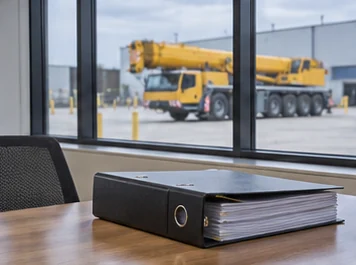
Get the signed master agreement or latest proposed version, work order, insurance exhibit, rental ticket and amendments. Add the purchase order, transport documents and any subcontract that allocates part of the work. Verify the dates, versions and legal entities on each document. Contract packages can include forms from different parties that refer to different job names. Confirm the name and location before comparing wording or forwarding a certificate request.
Put the job description in plain language. Identify who provides the crane, operators and gear, and who provides transport, rigging, supervision and acceptance. If another company supplies a unit or worker, add its agreement and record who pays and supervises that party. Record the tasks your business will handle and any activity another party specifically retains. Ask the project manager to resolve material differences between the scope and the planned operations.
Flag contract terms with operational consequences
Look for provisions on who handles unloading, site access and temporary storage, who bears risk for damage or theft, and who provides repair or replacement while equipment is out of service. On rental jobs, note who is responsible during transportation and what event ends the rental and damage period. A ticket may show an off-rent date while the pickup time and return inspection occur later. Record the gap in time and ask the parties how they intend to handle it.
Identify terms that affect the costs a party can claim. Depending on the agreement, these can include replacement value, continuing rent, protection from damage to the load or unit, recovery expenses, and limits on damages. If the contract assigns a duty to defend or indemnify, record the exact language and send it to counsel. Counsel can address enforceability, governing law and interpretation. The broker can compare the insurance language with the activities, entities and obligations the contract identifies.
Compare the insurance exhibit to actual policy terms
Prepare one row for each requirement. Include the clause number, required policy or evidence, requested parties, limits, applicable dates and the relevant activity. Check additional insured provisions in the policy or endorsements and determine which named parties or classes the wording addresses. Where a request is tied to written-contract conditions, use the actual agreement and dates during the comparison. If completed operations coverage is requested, check whether separate wording applies. If a waiver or primary and noncontributory wording is requested, identify the policy and endorsement that could address it.
Flag any request for direct physical damage to the load or rented equipment. Identify the property, value basis, operation and party with the insured interest. A liability policy and a scheduled property form may address different interests and triggers. Verify actual limits for a single item or occurrence, coverage territory, and deductibles or retentions. When a contract requires a higher umbrella limit, confirm how the excess is written over the applicable underlying forms and what terms differ across the layers.
Read certificates as one part of the evidence
Track when the certificate was issued and confirm the name, policy number, effective date and limit it reports. Compare the form and any attached endorsements against the precise contract requirements. A certificate listing a project owner or contractor does not establish the scope of additional insured coverage. Use the policy wording and any endorsements to understand the rights and terms that actually apply. In Texas, the Department of Insurance’s certificates FAQ explains limits on certificate wording, and Insurance Code Chapter 1811 states the statutory restrictions. Use applicable law for your jurisdiction.
When the party requesting a certificate asks for wording that differs from the policy, identify the precise discrepancy and ask whether it requires a policy change or an agreed change to the contract. Keep the broker, attorney and project lead on the same version. Record what still needs confirmation and who is responsible for it. Store detailed agreements and policy copies using an approved secure exchange.
Connect each stage to the right party and record
Consider a hypothetical equipment delivery that ends at an industrial project. The carrier arrives at the receiving location, the owner representative signs a delivery record, and the rigger later unloads the equipment for staging. The rigger may be contracted to return a day later to set the equipment while another contractor installs it. These are distinct events. Ask which entity signs each condition record, where the equipment waits and which agreement assigns responsibility during that time.
Create a short record for each handoff. Include the date, parties, custody, contract reference, the ownership of any equipment used and the decision still outstanding. The Project Handoff Worksheet is organized around those facts. Send technical and safety-review responsibilities to the qualified project team. Where within scope, federal OSHA's ground conditions provision and operator requirements can help identify records and responsible roles for the review.
Close out the contract review before commitment
Summarize the areas where scope, responsibility and evidence agree. For any discrepancy, note exactly what is being considered, who has authority to resolve it and the date by which a response is needed. An equipment replacement clause might need values from finance, policy wording from the broker and contract interpretation from counsel. Once resolved, keep the final agreement, work order and relevant policy evidence together. Give dispatch or project management the updated scope and contacts.
Use the Lift Contract and Insurance Review Checklist to prepare a short issue list. Bring the proposed contract and insurance exhibit, scope, equipment or load information, current relevant policy forms and job timeline. The insurance coverage overview can help classify the issue before the discussion. If more information is needed, arrange a secure exchange through the existing Montridge contact channels.