
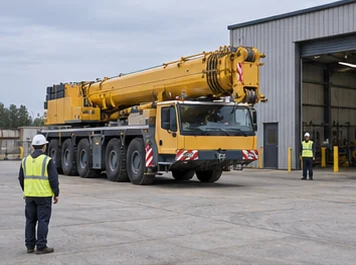
Start with the business change and its timing
Write a short summary of what is changing. Common examples include buying a higher-value crane, sending a unit to a different state, supplying an operator with equipment, moving from lifting to installation or renting from a second provider to meet a customer order. Identify the legal entity taking on the obligation and what date triggers the change. The relevant date could be the purchase, lease inception, carrier pickup, delivery, dispatch or the beginning of a new service agreement. Ask how the old and new arrangements overlap.
Identify the customer, financier and carrier if known. List the roles they will take and provide the current authorization or draft agreement for each. If dates and terms are still being negotiated, label them as proposed. A clear schedule lets the broker identify which information is needed immediately and which details can be confirmed as the business decision moves forward.
Document the equipment value and who holds an interest
For a new unit, collect make, model, year and serial number when available, the equipment and its attachments, acquisition or lease documents, and the location where it will normally be stored. Identify the invoice amount, requested insured value and available information about the basis of that value. Freight, rigging accessories or modifications might be included on one record and listed separately on another. Give each value a source and date. Flag any contract requirement to reimburse a different value.
Compare the new acquisition to the existing schedule. Ask how the policy handles newly acquired units, which notices or schedules are required, and what terms apply before the crane is listed by description. If it is leased or financed, ask who must be named in an insurance document and who has the financial interest at each stage. Review policy terms and any relevant lender or leasing conditions together. The Owned, Rented and Leased Equipment Schedule helps tie each unit to its documents.
Describe every job the new unit or team will perform
Identify operated work, bare rental and other contract arrangements separately. For each expected use, state who supplies the operator and rigging, who directs the work, which entity provides transportation and what party accepts the load for a particular task. If the unit is intended for a new class of work, describe it specifically. A plant shutdown, a bridge project and a waterfront job can have different third parties, agreements and custody transfers. Use your actual contracts and projections to show the expected mix.
If a new operation includes unloading or installation, identify the customer's equipment and known value alongside the unit your company supplies. Ask who records its condition at each point and whether it has to wait in a yard or staging area. Document any new customer obligations that extend beyond the physical work. A written contract might, for example, require an installation crew to accept a load at delivery although the crew actually arrives later. Resolve the timing before treating any handoff as complete.
Review transportation and rental before dispatch
List each proposed movement of the crane and gear and who is expected to transport it. Separate owned vehicles and trailers from hired carriers and customer pickup. Use shipment records and transport contracts to identify custody and condition at carrier pickup and delivery. Record the location of any overnight parking or intermediate storage so the broker can review the relevant coverage territory and conditions. Match the transport descriptions to the actual auto, equipment and cargo forms under consideration.
For a subrental, gather the upstream agreement and the end-customer agreement. They may use different definitions of the rental period, authorized operators, values, notice obligations and acceptable work locations. Create a note on who inspects the equipment at dispatch and after return, and how any discrepancy at the receiving yard will be recorded. The rental fleet checklist offers a one-page review organized around subrentals, high-value additions and operated dispatch.
Check changes in workers, worksite and jurisdiction
Have the qualified project team identify the work setting, jurisdiction and roles to be documented. For work within the scope of the federal construction crane rules, OSHA publishes specific provisions on ground conditions and operator training, certification and evaluation. Use the official State Plan directory to identify the appropriate agency for the location. Review technical and operational approvals with the qualified people managing the project.
For insurance review, identify the employer of each crew, its usual work location, the new work location and who supervises the activity. Flag rented operators or temporary workers when the paperwork and operating arrangement differ. For waterfront or vessel-related work, outline the actual duties and location. Review relevant state requirements and use the U.S. Department of Labor Longshore Act overview and FAQ to frame a separate analysis where the operation calls for it.
Bring the decision to the review before accepting the risk
Bring the proposed acquisition or lease paperwork, the latest schedule, projected operations and locations, the documents governing the new work, and the start date you need to meet. Include any pending questions about property values, employee supervision, hired transport or subcontracted services. Identify one person who can correct dates or assumptions as the transaction develops. Ask which issues need an endorsement, a different agreement or additional information before a decision can be made.
After the review, record what was confirmed, whose evidence was reviewed, the effective dates and any conditions that still apply. Share the decision with the people who receive equipment and dispatch crews so they can match the actual assignment to the facts used for the review. If the proposal changes from bare to operated rental, or adds an unexpected transport leg, reopen the relevant item. The renewal readiness guide shows how to keep those changes visible through the next renewal.